


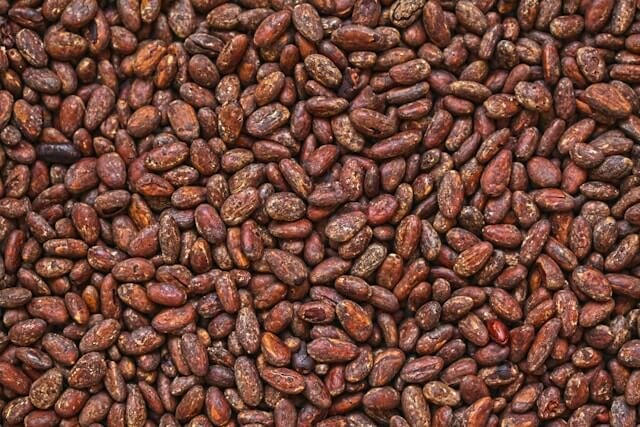
Chocolate bars quietly shrank. Some stopped being called “chocolate” at all. Behind that shift was one of the worst cocoa supply crises in decades and most consumers never saw it coming.
This article breaks down exactly why cocoa prices hit record highs in 2024, how that shortage changed what ended up on store shelves, where the market stands in 2025–2026, and why price swings are unlikely to stop even as supply recovers.
What Caused the 2023–2025 Cocoa Shortage
The short answer: too many problems hit the same place at the same time.
Ghana and Ivory Coast together produce roughly 60–70% of the world’s cocoa. When both countries took a major hit in the same seasons, global supply had nowhere to turn. By 2024, New York and London cocoa futures climbed to between $10,000 and $13,000 per tonne levels no one had seen before.
Here is what drove it:
- Disease: The cocoa swollen shoot virus spread rapidly through farms already running old, low-yielding trees. Sick trees produce less. Dying trees produce nothing.
- Bad weather: Erratic rainfall and hotter temperatures damaged harvests across multiple consecutive seasons. This was not one bad crop year. It was a multi-year deficit that built up over time.
- Neglected farms: In the years before the crisis, farm-gate prices were too low to justify serious investment. Farmers skipped replanting, skipped fertilizer, and skipped pest control. When climate shocks arrived, the farms had no buffer.
Climate change made everything worse. It increased both the frequency and the intensity of yield shocks across West Africa. The conditions were not random bad luck they were a predictable outcome of structural neglect meeting a changing climate.
How the Shortage Changed Chocolate on Store Shelves
Most consumers did not track cocoa futures. But they noticed the effects at the checkout.
Retail chocolate prices in the EU rose more than 15% year-on-year by December 2025. Cocoa and powdered chocolate followed the same trend, up 15.3% in the same period. ABC News reported that chocolate prices soared roughly 14.4% in the early weeks of 2026 compared to the year before.
Manufacturers had a few options. None of them were great for consumers.
Shrinkflation
Same packaging, smaller bar. You paid the same price for less chocolate. This happened widely across mass-market brands. Manufacturers also added more wafer, caramel, nuts, or fillings to reduce how much actual cocoa went into each product.
Think of it like a stir-fry where vegetables got expensive so the cook added more rice and less of the pricey ingredient. The dish looks similar. It contains much less of what made it good.
Reformulation and Relabeling
Some brands cut cocoa content so far that their products no longer met the legal definition of chocolate. Those products had to be relabeled. “Chocolate candy” or similar terms appeared on packaging where “chocolate” used to be.
The comparison is a useful one: think about the difference between fruit juice and a “fruit drink.” The label changed because the real ingredient got diluted below the legal threshold.
Hershey became a high-profile example. The company altered Reese’s formulations during the shortage and faced direct consumer backlash. By May 2026, Reuters reported that Hershey announced plans to return its Hershey and Reese’s products to their original recipes as cocoa prices came down from their peak.
Where the Cocoa Market Stands in 2025–2026
The acute shortage phase is over. But “over” does not mean prices returned to normal.
Cocoa futures fell nearly 70% from their late-2024 highs. Production improved in Ghana. South American suppliers, particularly Ecuador, increased output and helped plug some of the supply gap. The 2025/26 season is projected to approach supply-demand balance, with some analysts even forecasting a possible surplus.
So why are chocolate prices still high at the store?
Retail prices move much more slowly than commodity prices. Even as futures collapsed, EU chocolate prices were still more than 15% higher year-on-year as of December 2025. Manufacturers are slow to pass savings back to consumers especially after years of absorbing losses.
J.P. Morgan projects a medium-term cocoa price of around $6,000 per tonne. That is well below the 2024 peak, but it is roughly double the London average of approximately £1,749 per tonne from 2018 to 2022. FoodNavigator reported that London prices in 2026 are still forecast around £3,400 per tonne.
The bottom line for 2026: this is not a major shortage year. But prices have not returned to pre-crisis levels, and analysts do not expect them to.
Why Cocoa Price Volatility Is Unlikely to Stop
Here is where many coverage stops and where the real story continues.
Even with better supply in 2025/26, the underlying conditions that caused the crisis have not gone away. Analysts describe the current volatility as structural, not a one-off shock that resolved itself.
Several factors lock in that ongoing risk:
- Long growing timelines: Cocoa trees take several years to mature and bear pods. You cannot quickly expand supply in response to high prices. Investment decisions made today affect harvests years from now. This creates intense boom-and-bust cycles.
- Geographic concentration: More than 60% of global supply still comes from one region. A single climate event, disease outbreak, or political disruption in West Africa moves global prices immediately.
- Climate exposure: Higher temperatures and erratic rainfall in West Africa are not a temporary condition. The probability of future yield shocks is rising, not falling.
- Farmer income instability: Ghana’s cocoa board (Cocobod) cut the official farm-gate price by around 33% for the 2025/26 season as international prices dropped from their peak. When farmers earn less, they invest less. And when investment drops, trees age out, farms become vulnerable, and the cycle starts again.
Longer-dated cocoa futures trading above near-term contracts signals that markets expect supply tightness to persist. Traders are not betting on a fast return to old prices.
What This Means for Consumers Going Forward
Demand dropped sharply during the peak of the crisis. Analysts estimated global cocoa demand could hit a nine-year low in the twelve months ending in late 2025. Some consumers traded down to cheaper options or cut back on chocolate entirely. Others switched to non-chocolate snacks and, for some, those habits stuck.
Recovery in demand is expected but gradual. Reuters cited analyst projections that it could take around 2.5 years for demand to return to pre-crisis levels.
As prices ease, some manufacturers are already restoring original formulations. That is good news for quality. But the broader trend is not reversing fully. Many brands are likely to keep using more fillings, wafer layers, and cocoa-stretching ingredients as a cost management strategy even outside of crisis conditions.
For consumers, this means a few practical realities going into 2026 and beyond:
- Chocolate prices at the store will stay higher than pre-2023 levels for the foreseeable future, even if commodity prices keep falling.
- Mass-market products may continue to carry less cocoa per bar than they did five years ago, unless labeled otherwise.
- Premium and single-origin chocolate is likely to remain genuinely expensive, driven by real input costs not just marketing.
- Periodic future shortages remain a realistic possibility. The structural conditions that caused the 2023–2025 crisis have not been fixed.
For more coverage of business and market trends like this, visit Start Business Pitch.
The Bigger Picture
The cocoa shortage was not simply a weather story or a farming story. It was a warning about what happens when a global supply chain concentrates too much in one region, underinvests in farms for years, and then meets a climate system that is becoming less predictable.
The worst of the crisis has passed. Supply is recovering. Some chocolate bars are returning to their original recipes. But the market has permanently repriced and the structural vulnerabilities that created the 2023–2025 shortage are still in place.
Expect better availability in 2026. Do not expect cheap chocolate to return anytime soon.
Also Read: