

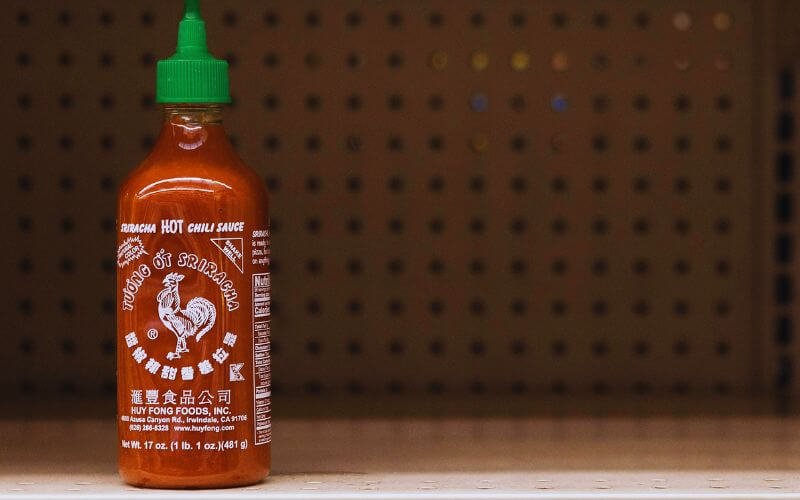
At some point in 2022 or 2023, millions of people reached for that familiar rooster bottle and found empty shelves. Prices on resale sites climbed. Restaurants quietly pulled it from tables. Food writers covered it like a national emergency. So what actually happened?
This article breaks it down clearly: which brand was affected, why the peppers were the problem, what weather had to do with it, and what your real options are if you still can’t find a bottle.
This Was a Huy Fong Problem, Not a Sriracha-Wide Problem
The first thing to understand is that “sriracha shortage” almost always meant one specific product: Huy Fong Foods’ version, sold in the clear bottle with the green cap and rooster logo.
Other brands that make sriracha-style sauce were largely unaffected. If you walked into a store and saw sriracha on the shelf, it wasn’t a different product it was simply made by a different manufacturer. The shortage was brand-specific, not category-wide.
Think of it this way: if one bakery runs out of flour, that doesn’t mean every bakery stops selling bread. The same logic applies here. Huy Fong had a supply problem. Other hot sauce makers did not share that same problem.
So if someone told you all sriracha was gone, that wasn’t quite right. What was gone or very hard to find was Huy Fong’s version specifically. That distinction matters when you’re trying to figure out what to buy.
The Real Cause Was the Peppers, Not the Factory
Huy Fong uses a specific red jalapeño-style chili pepper. Without the right peppers in the right condition, production cannot continue at scale. That’s exactly what happened.
The company cited two related problems: not enough peppers were available, and the peppers that were available were not red enough. That second point trips people up, so it’s worth explaining.
Why “Too Green” Peppers Shut Down Production
Chili color directly affects the final sauce’s color and flavor. A batch made from under-ripe, greenish peppers would look different and taste different from the product people expect. Huy Fong wouldn’t ship a product that looked or tasted off-standard.
According to a 2024 USA Today report, Huy Fong announced a production pause specifically because the chili supply was “too green” and the sauce’s color could be affected. This wasn’t a minor quality concern it was a core production blocker.
Imagine a tomato sauce brand refusing to produce if their tomatoes arrive pale and unripe. The product would fail to meet expectations, and returning those bottles would cost more than pausing production. Huy Fong made the same call.
Pepper supply came primarily from growing regions in California, Mexico, and New Mexico. All of those regions were hit by drought and poor weather conditions, which affected both crop size and pepper quality.
Weather and Drought Made a Fragile Supply Chain Worse
Pepper crops are sensitive to heat, water, and timing. When drought hits key growing regions, you don’t just get fewer peppers you get lower-quality peppers that may not meet the color or flavor standards a producer requires.
Earlier reports confirmed that severe drought in Mexico was a direct contributing factor. Huy Fong said at one point that it didn’t know when chili peppers would be fully available again because of how bad conditions were.
This wasn’t one bad season that cleared up quickly. The problem came in waves across multiple years, which is why the shortage didn’t resolve cleanly or all at once. Each growing cycle brought new uncertainty.
The story is a useful parallel to other agricultural supply shocks coffee, avocados, olive oil. In each case, one difficult growing period ripples into retail shortages months later because there’s little inventory buffer to absorb the hit.
Huy Fong’s reliance on a narrow set of pepper-growing regions meant there was almost no backup plan when those regions underperformed. That kind of supply-chain fragility is easy to overlook until it becomes visible on empty store shelves.
That said, weather was one cause not the only cause. Supplier relationship problems and internal production decisions also contributed. Food Dive reported the issue as a combined supply-chain and management problem, not just a climate story.
Huy Fong Paused Production More Than Once
This is important context: the shortage was not a single event that got fixed and went away. It became a recurring pattern.
The company halted or reduced production at multiple points, including disruptions that trace back to around 2020 and then again in 2022 and 2023. In 2024, Huy Fong announced yet another production pause until after Labor Day, again citing chili pepper availability and color issues.
That 2024 pause matters because it shows the problem hadn’t been fully solved even after two years of news coverage and public attention. Supply was still inconsistent.
Behind the production pauses, there was also a longer-running dispute between Huy Fong and a key pepper supplier. According to later reporting, this business relationship had been strained for years, which made the already-difficult pepper supply situation even harder to stabilize. When you combine bad weather, a narrow supplier base, and a fractured business relationship, repeated shortages become almost predictable.
Did the Shortage Affect Restaurants and Retailers?
Yes, and noticeably. Because Huy Fong Sriracha had become a genuine pantry staple not just a niche product its absence was felt widely. Restaurants that used it as a condiment or ingredient had to find substitutes or simply remove it. Some stopped stocking it entirely.
Retailers saw prices spike on remaining bottles. Resellers listed it online at marked-up prices. The fact that a hot sauce became a minor resale market item says a lot about how embedded it had become in everyday cooking.
By mid-2023, coverage suggested the shortage was easing. More bottles started appearing on shelves. But production had not returned to normal capacity, and the 2024 pause showed that recovery was uneven at best.
What to Actually Do If You Can’t Find Huy Fong Sriracha
Here are practical steps, in order of simplicity.
Step 1: Look for Other Sriracha Brands First
Several other companies make sriracha-style sauce. These were not affected by Huy Fong’s supply problems. Check the hot sauce aisle carefully you may find bottles from different brands that were sitting right next to where Huy Fong used to be.
The flavor profiles differ slightly, but many people found reasonable substitutes without much searching.
Step 2: Consider Other Chili Condiments
Sambal oelek, chili garlic sauce, and gochujang all offer different but workable heat and depth. Sambal oelek in particular is made by Huy Fong itself and uses similar base ingredients, so it’s a close kitchen substitute even if it’s not identical at the table.
Step 3: Don’t Pay Resale Prices
During the shortage, bottles appeared on resale sites at several times their retail price. Unless you have a very specific reason, it’s not worth it. Alternatives exist and work well. The product is a condiment, not irreplaceable.
Step 4: Check Availability Regularly
Because production has come back in waves, availability at local stores has been inconsistent. A store that had nothing in March might be restocked by June. Checking periodically is more useful than assuming it’s permanently gone.
What This Story Actually Tells Us
The Sriracha shortage is a clean example of how a single supply decision in this case, relying heavily on one type of pepper from a limited set of growing regions can turn one bad harvest season into a product crisis visible on shelves nationwide.
It’s also a reminder that brand-specific problems can look like category-wide problems when one brand is dominant enough. Huy Fong became so associated with “sriracha” that when their product disappeared, people assumed the entire category was gone.
For food businesses watching this story, it’s a practical case study in supply-chain concentration risk. For everyday shoppers, the lesson is simpler: know the difference between a brand shortage and a product shortage. They require different responses.
For more business and consumer news explained clearly, visit Start Business Pitch.
The rooster bottle may come and go. Knowing what actually happened means you’re never caught off guard by the next shortage whether it’s hot sauce, olive oil, or something else entirely.
Also Read: